Hyperfine / clock-state qubit enc_hf
Two ground-state hyperfine or nuclear-spin sublevels at a field-insensitive clock point, the default qubit for every trapped-ion and neutral-atom vendor.
Hyperfine / clock-state qubit
Ground-state hyperfine (or nuclear-spin) levels of atoms and ions; second-to-hour coherence.
Brief →Key references
Design space — attributes
- (a) carrier affinity
- natural
- (b) time · entangling
- —
- (c) readout
- —
- (d) mobility
- —
- (e) control
- —
- (f) error structure
- stochastic Pauli, leakage
- (g) manufacturing
- —
Evaluation space — dated attributes
Actors & goals — annotations
Edges
Used by 45 machines (44 primary · 1 alternate)
- trapped ions 25
- JION eleQtron + Forschungszentrum Julich press ▤ §II Effective spin-spin interaction (qubit states |F=0,mF=0> and |F=1,mF=+1> of the hyperfine ground manifold) ✅
- QSea I (DLR QCI ion-trap demonstrator) eleQtron with NXP Semiconductors and ParityQC, for the DLR Quantum Computing Initiative press press link ◌ 🔎
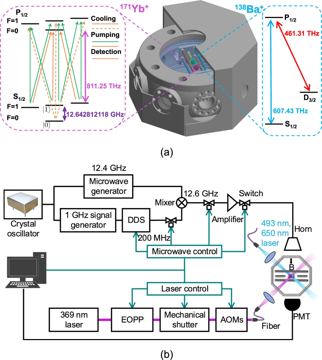
- Aria IonQ product page ▤ §Results: Gate implementation and characterization (|0>=|F=0,mF=0>, |1>=|F=1,mF=0> hyperfine sublevels of 171Yb+) 🔎
- 40-ion Ba-133 qLDPC testbed (IonQ: a Tempo engineering test system) IonQ press press ▤ §II (Mid-circuit measurement) 🔎
- Forte / Forte Enterprise IonQ paper product page press ▤ §2 Experimental setup 🔎
- QUARTET Oxford Ionics (IonQ) press ▤ §III Experiments (qubit in 4S1/2 Zeeman sublevels of 40Ca+, 240 MHz at 8.5 mT) ✅
- IonQ Superion 10K IonQ press ◌ 🔎
- Superion 256 IonQ press press ◌ 🔎
- Tempo IonQ product page product page blog ◌ 🔎
- Apollo Quantinuum blog ◌ 🔎
- System Model H1 (H1-1) Quantinuum blog press ◌ 🔎
- System Model H2 (H2-1, H2-2) Quantinuum paper paper paper ▤ §II (The H2 quantum computer) ✅
- Helios Quantinuum paper paper paper ▤ §Ion species: qubit and coolant ✅
- Helix architecture on Helios Quantinuum paper ◌ 🔎
- Sol Quantinuum blog ▥ §How do we get there? (Helios will use 137Ba+ qubits, in contrast to 171Yb+ in H1/H2) 🔎
- Montage (first-generation QaaS system, up to 50 qubits) Quantum Art product page ◌ 🔎
- Perspective (1,000-qubit multi-core system) Quantum Art press ◌ 🔎
- Aba|Qu 1.0 (Tiansuan-1, 天算1号) Qudoor (Guokaike) press press ◌ 🔎
- XAPHIRO (QUDORA 50-qubit NFQC prototype for the DLR Quantum Computing Initiative) QUDORA Technologies ▣ Fig. 2 (9Be+ hyperfine levels; field-independent |1,1>-|2,1> qubit at 22.3 mT) ✅
- NFQC-1k QUDORA Technologies-led consortium (TU Braunschweig, Leibniz University Hannover, PTB, Forschungszentrum Jülich, NXP Semiconductors Germany, AQT Germany) press ◌ 🔎
- 70-qubit ion quantum computer (FIAN / Rosatom roadmap) Lebedev Physical Institute (FIAN) and the Russian Quantum Center, Rosatom roadmap ▨ 🔎
- QSCOUT (Quantum Scientific Computing Open User Testbed) Sandia National Laboratories paper paper product page ▦ ✅
- 2-D site-resolved ion simulator Tsinghua University (Duan group) paper paper ▣ Fig. 1b; main text (qubit encoding) ✅
- Maryland / Duke Quantum Center (EURIQA lineage) University of Maryland / Duke University paper paper ▤ Methods: Native ion-trap single-qubit gates ✅
- iQPU / UQConnect Universal Quantum press ▤ §Preserving qubit coherence (qubit in the S1/2 hyperfine manifold of 171Yb+) ✅
- neutral atoms 20
- Magne Atom Computing + Microsoft, for QuNorth press press ◌ 🔎
- Phoenix (Gen-1) and Gen-2 Atom Computing press press ▤ §II (Architecture) ✅
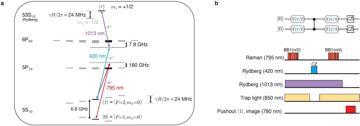
- 6,100-qubit tweezer array Caltech (Endres group) paper paper press ▣ Fig. 4a-c (hyperfine clock states |0>,|1>; Ramsey T2* 14.0 ms; XY16 T2 = 12.6(1) s); Methods: Qubit state preparation, control, and readout ✅
- Hanyuan-1 Zhongke Kuyuan (Wuhan, CAS) press press ◌ 🔎
- Hanyuan-2 Zhongke Kuyuan (Wuhan, CAS) press press ◌ 🔎
- 448-atom fault-tolerant processor Harvard / MIT / QuEra paper press ▤ §Neutral atom logical processor 🔎
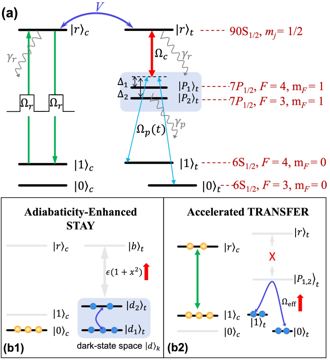
- continuously reloaded 3,000-atom machine Harvard / MIT paper paper ▣ Extended Data Fig. 5d (atomic levels for fast initialization); Methods: Qubit Initialization; Methods: Qubit Manipulation and Readout ✅
- Infleqtion Illinois neutral-atom quantum computer (IQMP, Chicago) Infleqtion press ◌ 🔎
- Sqale Infleqtion press ▤ Methods: State preparation and measurement ✅
- 72-qubit neutral-atom (Rb) quantum computer prototype (50 qubits in Dec 2024) Lomonosov Moscow State University with the Russian Quantum Center ◌ 🔎
- Pasqal Centaurus Pasqal product page press ◌ 🔎
- Pasqal Lyra Pasqal press ◌ 🔎
- Orion Alpha / Beta ("Ruby") / Gamma Pasqal product page press press ◌ 🔎
- Vela Pasqal blog ◌ 🔎
- Qinghe-1 (Qinghe No. 1, 清河一号) Zhongqi Wuliang (Shanghai, CAS SIOM spin-off) press press ◌ 🔎
- Gemini-class QuEra paper product page ▤ Methods: System overview 🔎
- Libra QuEra press ◌ 🔎
- Quantum X Labs neutral-atom platform (50+ qubits, claimed) Quantum X Labs Inc. (Nasdaq: QXL) press link ◌ 🔎
- neutral-ytterbium QPU Yaqumo (+ Fujitsu) press press ◌ 🔎
- Fresnel / Fresnel 2 Pasqal ▣ Fig. 7 (single- and two-qubit gates on |0>,|1>); §2.2.1 Digital quantum processing 🔎 (alternate)
Pictures
Every picture carries the story of what it shows and its credit line.
Hyperfine / clock-state qubit
Two ground-state hyperfine or nuclear-spin sublevels at a field-insensitive clock point, the default qubit for every trapped-ion and neutral-atom vendor.
Verdict. The least differentiating layer in the ion/atom stack — universal, so no moat and no lock-out; the contest is one layer up, in how the qubit is driven.
Λ = error-suppression factor per code-distance step; QBI = DARPA Quantum Benchmarking Initiative (Stage A concept → B R&D plan → C government V&V); G1–G7 = the report's goal classes (see Actors & economics).
Identity & lineage
Two hyperfine (or nuclear-spin) ground-state sublevels at a bias field where the first-order Zeeman shift vanishes, leaving only the quadratic term: coherence in seconds to hours, with single-ion memories reaching hour scale [104]. The lineage is the field's own: NIST's first ion-trap logic gate stored a qubit in the internal states of one laser-cooled ion (Monroe, Meekhof, King, Itano, Wineland, PRL 75, 4714, 1995) [374], the default for ions and later atoms ever since.
f = Pauli + leakage — leakage into neighbouring sublevels, invisible to a Pauli decoder; reach: four architectures, QCCD and electronic-gate ions, alkali atoms, and alkaline-earth and alkaline-earth-like atoms (Sr, Yb) [graph].
Physics & limits
The clock point kills first-order field sensitivity; what remains is the quadratic Zeeman term plus field gradients across the register, so memory degrades with register size, not only time. The memory is not the limit — the drive is. Raman gates carry a spontaneous-scattering error falling only as ~1/Δ, and the scattered photon usually lands outside the qubit manifold: leakage, not Pauli error. Deleting the laser deletes that term — 2Q 99.97(1)%, 1Q 99.99916(7)% on a ten-qubit seven-zone trap Dfact, 8.4×10⁻⁵ without ground-state cooling D[102]. The control modality moves the floor, not the encoding.
Engineering state of the art
table
| Date | Figure | Who | Tag+key |
|---|---|---|---|
| 2024-12-05 | ⁴³Ca⁺ clock qubit, chip microwave resonator, room temperature, unshielded: 1.5(4)×10⁻⁷ per Clifford, T2 ≈ 70 s | Oxford | D[103]fact |
| 2025-11 | Helios fleet (98 Ba⁺): 1Q 2.5×10⁻⁵, 2Q 7.9×10⁻⁴, leakage 1.1×10⁻⁵ per Clifford | Quantinuum | D[97] |
On atoms, Cs hyperfine T2 = 12.6 s in a 6,100-atom array D[138]. Fleet-scale term: two-qubit-gate leakage, ~10⁻⁵ per Clifford on ions against ~10⁻⁴ per atom per gate on arrays.
The PatSnap counts mix patents and papers. Not published: the isotope and transition of the hour-scale Yb⁺ memory, which its abstract calls "a single Yb ion-qubit memory"; a multi-qubit fleet-average equivalent of Oxford's 1.5(4)×10⁻⁷; and a dated supplier of isotopically enriched ¹³⁷Ba or ¹⁷¹Yb, so the enrichment chokepoint is unconfirmed.
Manufacturing, materials & supply chain
No dedicated process; the encoding rides whatever surrounds the species (Ba⁺, Yb⁺, Ca⁺, Cs, Rb, Sr). Two control families, two supply chains: Raman gates need the optical stack — Helios runs seven-plus wavelengths across 1,228 electrodes — while chip microwave traces delete it and move the burden to trap fabrication, internalised by IonQ's SkyWater purchase C[19]; eleQtron sells the same idea as MAGIC C[129]. Enriched ¹³⁷Ba and ¹⁷¹Yb are the plausible chokepoint, but no dated supplier fact was found; no specific ECCN.
Role in the stack
Architectures: the primary encoding of all three trapped-ion architectures (QCCD; linear Paul trap with individual laser addressing; electronic qubit control) and of the alkali Rydberg tweezer array, and the alternate on the alkaline-earth tweezer array. Requires nothing — the base encoding, the most reused node in the tree. Its "replaces" edge to omg is an extension: omg keeps these ground states and adds a metastable manifold so one species supplies qubit, ancilla and coolant fact. It adds nothing to the derived clock, set on the QCCD architecture by transport — a 9.66 ms round against the measured ~55 ms full-width layer (≈18 layers/s) and a 70 µs gate. Verification: Oxford's 1.5(4)×10⁻⁷ is one qubit in a dedicated apparatus, Quantinuum's 2.5×10⁻⁵ a 98-ion fleet average — three orders apart; only the fleet number is an architectural input.
Actors & economics
Who.
| Organisation | Role | Country | What exactly | Evidence |
|---|---|---|---|---|
| Quantinuum | developer | US | Helios, 98 Ba⁺ qubits | D[97] |
| IonQ | developer | US | Electronic gates, own trap fab | D[102]C[19] |
| University of Oxford | research | UK | ⁴³Ca⁺ single-qubit record | D[103] |
| Atom Computing | developer | US | Yb nuclear-spin clock qubits | C[154] |
Money.
2026-06-03 · Quantinuum · IPO, Nasdaq QNT, after a Sep-2025 round at $10 B pre-money · $1.68 B gross · closed Cfactfact
2026-07-31 · IonQ · SkyWater acquisition closed · ~$1.8 B Cfact
Market & supply chain. Nothing is sold as "hyperfine encoding": the money is in the drive, laser chains against microwave traps. Concentration is low in optics, rising in traps now IonQ owns a fab. Pays G3/G4/G7, the substrate under nearly every logical qubit yet demonstrated.
IP & standards. PatSnap Eureka (2026) ranks IonQ first among named assignees, 9+ records (5 JP, 2 EP, 2 IL pending) on gate pulses and motional modes; the count mixes patents with papers P[375].
Roadmaps & track record. Quantinuum: Sol 2027, Apollo 2029 (promised 2024-09-10); Helios on schedule 2025-11-05, 10×/year quantum volume held. IonQ: 256 qubits at 99.99% slipped to H1 2027, and 4,000 qubits by 2026 (promised 2020) missed ~40×. Quantinuum delivers dates, IonQ physics.
Strategic reading. Universality is the point: everyone uses it, so it is neither moat nor lock-out. The contest is the drive. If all-electronic control scales past ten qubits the laser chain becomes a liability for Quantinuum and every atom vendor; if not, IonQ bought a foundry for a lab result.
Outlook & open questions
Confirm if all-electronic control reaches a fleet average below 10⁻⁵ with published leakage, or a second group replicates 8.4×10⁻⁵; demote if it stays a ten-qubit result. Best case 2029: microwave-driven hyperfine qubits the default. Worst case: gradient-limited leakage caps ions near 10⁻⁵ and omg takes the base.
References
- [19] IonQ, “IonQ Completes Acquisition of SkyWater Technology,” Jul. 31, 2026. [Online]. Available: https://www.ionq.com/
news/ Cionq-completes-acquisition-of-skywater-technology - [97] A. Ransford et al., “A 98-qubit trapped-ion quantum computer with all-to-all connectivity,” Nature, vol. 655, no. 8121, pp. 81–86, Jun. 2026, doi: 10.1038/s41586-026-10676-4. arXiv:2511.05465. D
- [102] A. C. Hughes et al., “Trapped-ion two-qubit gates with >99.99% fidelity without ground-state cooling,” arXiv:2510.17286, Oct. 2025. D
- [103] M. C. Smith, A. D. Leu, K. Miyanishi, M. F. Gely, and D. M. Lucas, “Single-qubit gates with errors at the 10⁻⁷ level,” Phys. Rev. Lett., vol. 134, no. 23, Art. no. 230601, Jun. 2025, doi: 10.1103/42w2-6ccy. arXiv:2412.04421. D
- [104] P. Wang et al., “Single ion-qubit exceeding one hour coherence time,” Nat. Commun., vol. 12, Art. no. 233, Jan. 2021, doi: 10.1038/s41467-020-20330-w. arXiv:2008.00251. D
- [129] A. Cordes, “Quantum computing scale-up eleQtron secures €57 million in one of the largest Series A funding rounds worldwide,” eleQtron, May 5, 2026. [Online]. Available: https://eleqtron.com/
en/ Cquantum-computing-scale-up-eleqtron-secures-57-million-in-one-of-the-largest-series-a-funding-rounds-worldwide/ - [138] H. J. Manetsch, G. Nomura, E. Bataille, K. H. Leung, X. Lv, and M. Endres, “A tweezer array with 6100 highly coherent atomic qubits,” Nature, vol. 647, pp. 60–67, 2025, doi: 10.1038/s41586-025-09641-4. arXiv:2403.12021. D
- [154] Atom Computing, “Atom Computing Raises More Than $300 Million to Accelerate Deployment of Fault-Tolerant, Neutral-Atom Quantum Computers,” PR Newswire, Jun. 16, 2026. [Online]. Available: https://www.prnewswire.com/
news-releases/ Catom-computing-raises-more-than-300-million-to-accelerate-deployment-of-fault-tolerant-neutral-atom-quantum-computers-302800832.html - [374] C. R. Monroe, D. M. Meekhof, B. E. King, W. M. Itano, and D. J. Wineland, “Demonstration of a Fundamental Quantum Logic Gate,” Phys. Rev. Lett., vol. 75, no. 25, pp. 4714–4717, Dec. 1995, doi: 10.1103/PhysRevLett.75.4714. D
- [375] PatSnap, “Trapped Ion Quantum Computing: Technology Landscape 2026,” Apr. 23, 2026. [Online]. Available: https://www.patsnap.com/
resources/ Pblog/ rd-blog/ trapped-ion-quantum-computing-2026-patsnap-eureka/
G Smith, Leu, Miyanishi, Gely, Lucas (Oxford), "Single-qubit gates with errors at the 10^-7 level", arXiv:2412.04421 (2024-12-05, rev 2025-05-28): 43Ca+ hyperfine clock qubit in a mi… · 2024-12-05 · https://arxiv.org/abs/2412.04421
G Loschnauer, Mosca Toba, Hughes, King, Weber, Srinivas, Matt, Nourshargh, Allcock, Ballance, Matthiesen, Malinowski, Harty, "Scalable, high-fidelity all-electronic control of trappe… · 2024-07-10 · https://arxiv.org/abs/2407.07694
G Allcock, Campbell, Chiaverini, Chuang, Hudson, Moore, Ransford, Roman, Sage, Wineland, "omg blueprint for trapped ion quantum computing with metastable states", Applied Physics Let… · 2021 · https://cua.mit.edu/dev_site/publications/omg-blueprint-for-trapped-ion-quantum-computing-with-metastable-states
G Quantinuum raised $600 M at a $10 B pre-money valuation (NVentures, Quanta, QED, JPMorgan), 2025-09-04 · 2025-09-04 · https://www.honeywell.com/us/en/news/press-releases/2025/09/honeywell-announces-600-million-capital-raise-for-quantinuum-at-10b-pre-money-equity-valuation-to-advance-quantum-computing-at-scale
G Quantinuum IPO priced 2026-06-03: 28,000,000 shares at $60 = $1.68 B gross, Nasdaq QNT; Q2-2026 revenue $8.0 M, cash $2.1 B, FY guidance $28–32 M · 2026-06-03 · https://www.quantinuum.com/press-releases/quantinuum-announces-pricing-of-upsized-initial-public-offering
G IonQ acquired SkyWater Technology: $15.00 cash + 0.4883 IonQ shares per share (~$1.8 B at announcement 2026-01-26), closed 2026-07-31 · 2026-07-31 · https://www.ionq.com/news/ionq-completes-acquisition-of-skywater-technology