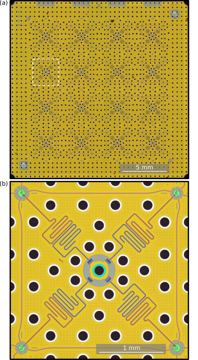
RIKEN 64-qubit superconducting processor
RIKEN with AIST, NICT, Osaka University, Fujitsu, NTT
RIKEN 64-qubit superconducting processor
פרופיל המרשם — הגרסה של המכונה לארכיטקטורה שלה (שדות המרשם באנגלית)
סוג הקיוביט: transmon
מנגנון השער: coupler type not published (fixed vs tunable unresolved)
קישוריות: 2-D square arrangement of unit cells
בקרה: microwave drive at 8-9 GHz; perpendicular ("3-D vertical") wiring package
מיקום הבקרה: room-temp
קריאה: dispersive
ראיה לשער: אין נתון שפורסם
דגלים: לא פורסמו שיעורי שגיאה, המקור לא אושר
טכנולוגיות לפי שכבה — התא של המכונה בכל שכבה
| 1 נושא הקיוביט | |
| 2 קידוד | קיוביט פיזי חשוף (ללא קידוד) · ראשית ◌ 🔎 Bare two-level subspace — Computational subspace of an anharmonic oscillator; leakage to |2⟩ is the price. |
| 3 מנגנון השער | CZ / iSWAP במצמד בר-כוונון · חלופית ▨ 🔎 coupler type not published (fixed vs tunable unresolved); g_tc is nearest technology — undisclosed — קיים, אך דבר לא פורסם ▨ 🔎 gate mechanism not published; no official source states fixed capacitive vs tunable coupling |
| 4 קישוריות והובלה | סריג סטטי של שכנים קרובים · ראשית ▥ Fig. 1 (16 basic units of 4 qubits arrayed in a square); Fig. 6 (periodic planar tiling of 4-qubit units) ✅ 16 four-qubit unit cells in a 2-D square arrangement on one ~2 cm chip (64 q) |
| 5 בקרה | הולכת אותות אנכית (מחוץ למישור) — VIO, קואקסמון, חיווט תלת-ממדי · ראשית ▥ Fig. 2 (perpendicular wiring package: control/readout lines via contact probes); Fig. 5 (wiring in DR) ✅ perpendicular ("3-D vertical") wiring package: signals brought in normal to the chip plane, not routed laterally; reused by Fujitsu at 256 q אלקטרוניקה בטמפרטורת החדר + כבל קואקסיאלי/כבל גמיש לכל קיוביט · חלופית ▥ Fig. 3 (qubit controller: microwave oscillator + receiver; 96 input / 16 output wires) ✅ room-temperature microwave drive at 8–9 GHz into a dilution refrigerator |
| 6 קריאה | קריאה דיספרסיבית במיקרוגל (+TWPA, מסנן פרסל) · ראשית ▥ Fig. 3 (16 output wires for readout, microwave receiver); Fig. 2 (readout wiring) ✅ dispersive |
| 7 קוד | |
| 8 מפענח | |
| 9 חיבור בין-מודולי | — none — אין דבר בשכבה זו ▥ Fig. 1 (single 64-qubit chip); Fig. 5 (one chip in central magnetic shield) ✅ monolithic single ~2 cm chip, no interconnect |
| 10 ייצור |
ראיות: ✅ 6 / 12
תמונות
כל תמונה מלווה בתיאור של מה שהיא מראה ובשורת הקרדיט שלה.