Advantage
Advantage
פרופיל המרשם — הגרסה של המכונה לארכיטקטורה שלה (שדות המרשם באנגלית)
סוג הקיוביט: rf-SQUID flux qubit (analog Hamiltonian carrier)
מנגנון השער: analog annealing evolution; not a gate
קישוריות: Pegasus, degree 15
בקרה: on-chip flux DACs + superconducting control circuitry
מיקום הבקרה: on-chip flux DAC
קריאה: QFP / SQUID flux readout through on-chip shift registers
ראיה לשער: אין נתון שפורסם
קודים: qac
דגלים: הפניה למחשב הרפיה בלבד
טכנולוגיות לפי שכבה — התא של המכונה בכל שכבה
| 1 נושא הקיוביט | קיוביט שטף rf-SQUID (מחשב הרפיה) · ראשית ▤ §Experimental testbed (ADV1: 5,627 qubits, Pegasus, cryostat set point 12 mK) ✅ rf-SQUID flux qubit (analog Hamiltonian carrier); 5,000+ qubits; DEPLOYED Sep 2020, still in service |
| 2 קידוד | — none — אין דבר בשכבה זו ◌ 🔎 analog annealer has no encoding layer; the anneal architecture declares an empty L2 |
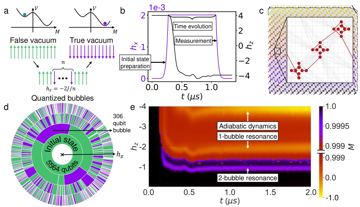
| 3 מנגנון השער | הרפיה קוונטית (התפתחות אנלוגית) · ראשית ▣ §Quantum annealing (Methods); Fig. 5 (dynamical scaling, ta = 7 ns and 20 ns quenches) ✅ analog annealing evolution; not a gate |
| 4 קישוריות והובלה | מצמדים לטווח ארוך על השבב (מצמדי c, בסדר גודל של mm) · ראשית ▣ Fig. 1 (roadway drawing of Pegasus P3: internal/external/odd couplers); §2 Pegasus family of topologies ✅ Pegasus topology, degree 15 |
| 5 בקרה | ריבוב DAC-שטף על השבב · ראשית ▣ Fig. 3–5 (Φ-DAC schematic, SFQ sources); Fig. 8 (XYZ addressing); §III Design and operation of a Φ-DAC ✅ on-chip flux DACs + superconducting control circuitry |
| 6 קריאה | קריאת שטף באמצעות QFP / אוגרי הזזה SQUID (מחשבי הרפיה) · ראשית ▤ §readout (QFP shift register; microresonator frequency multiplexing) ✅ QFP-based shift registers move qubit states along horizontal and vertical tracks to edge microresonators read in parallel by frequency multiplexing; Advantage_system4 readout 17–235 µs, error ≤ 0.001 (solver properties) קריאה דיספרסיבית במיקרוגל (+TWPA, מסנן פרסל) · חלופית ◌ 🔎 path-assigned ro_disp describes transmon readout, not annealer readout; actual is QFP/SQUID flux readout |
| 7 קוד | — (פער אטלס: ∅G-qac) · ראשית ▤ abstract ✅ quantum annealing correction (penalty-repetition encoding) on up to 1,322 logical qubits of Advantage 4.1 (sweep 7 Oct 2026, source read) |
| 8 מפענח | |
| 9 חיבור בין-מודולי | |
| 10 ייצור | ליתוגרפיה של קיוביטים מוליכי-על (צמתי Al/AlOx/Al, חיווט Nb, 300 mm) · ראשית ▣ §III.D Minimizing Φ-DAC footprint (6 Nb metal layers, 250 A/cm² trilayer); Fig. 9 (chip micrograph) ✅ superconducting flux-qubit lithography (in-house D-Wave process not published); no machine-specific fab source |
רשומות סטנדרטיות
דרגת קישוריות → 15 neighbours · typical (Pegasus)
Sep 2020 · מקור
ראיות: ✅ 7 / 11
תמונות
כל תמונה מלווה בתיאור של מה שהיא מראה ובשורת הקרדיט שלה.